*NEW* Search Our Team Reports! Type a word/phrase in the box below (hint: try "settlers').

10.31.2024

The Road Home

“I hate this place so much,” I thought.

It’s was 7:46 PM and the checkpoint to get home was closed early. “Why does it have to be so hard?!” I breathed away the tears. 

This is what it’s all about, isn’t it? They want the Palestinians to hate being here. They want to drive them out by nickel and diming away their sanity. 

Side roads are closed with massive boulders so a hundred feet away another path must be made to the same road. Main roads have been bulldozed so already dilapidated cars take an even greater beating. 

Every nugget and every crumb adds to an almost certain resignation, but then why can’t I see it in Palestinian faces? How do they smile? How do they find something extra in nothing to share with me and their neighbors? How do they find joy given the incessant chipping away of peace and stability? 
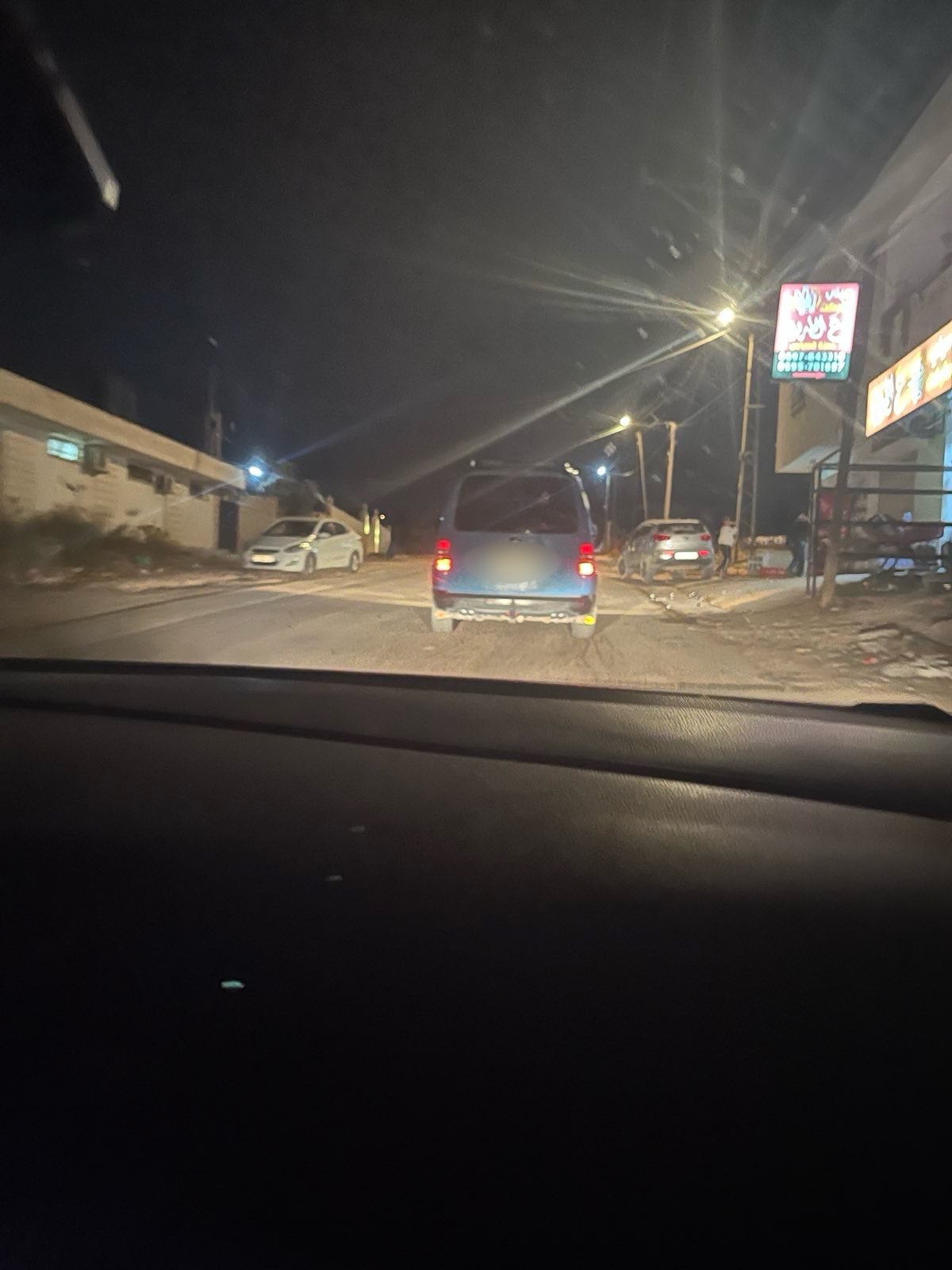
We are forced to turn around at the checkpoint, behind us was a Palestinian. We yell, “as-salamu alaykum,” out the window and they stop to roll down theirs. We yelled the town we were trying to go to, the driver nodded his head and said to hurry. We raced through the town following them. They were going to lead us home. Even though they are the ones who this labyrinth is designed to inconvenience, their faces show us nothing but kindness and warmth. With smiles they gladly help us. The only time tonight I can find a smile is looking back at them. 

I don’t hate this place. Even though they want us to hate it, even though they want them to hate it. I love Palestine, and they love their home. Their spirit will be unbroken and inspired by their beautiful resilience. The tears come again and my heart is filled by their spirit.

10.30.2024

Common Pigeons

It is early morning and the shops are just opening. A shop owner walks out and spreads a bag of grain on the ground. The pigeons descend by the flock, one after the other. The wide pedestrian way fills with pigeons joining the resident cats.

Through the swirling pigeons, two children appear. It is hard to tell if they are scaring up the pigeons intentionally or just as a by-product of their meanderings. The children become more visible, now that they are halfway through the swirling pigeons.

A boy and a girl, a year apart, both dressed for grade school, chase the pigeons and then lose interest in them. Walking parallel to them, but staying out of the flocks of pigeons, is a man carrying two small book packs.

This scene is by Damascus Gate in Jerusalem. A father walking kids to school like this could be any city around the world. It reminds us how much people around the world, despite the divisions, have in common.

10.29.2024

A Ridge that Divides

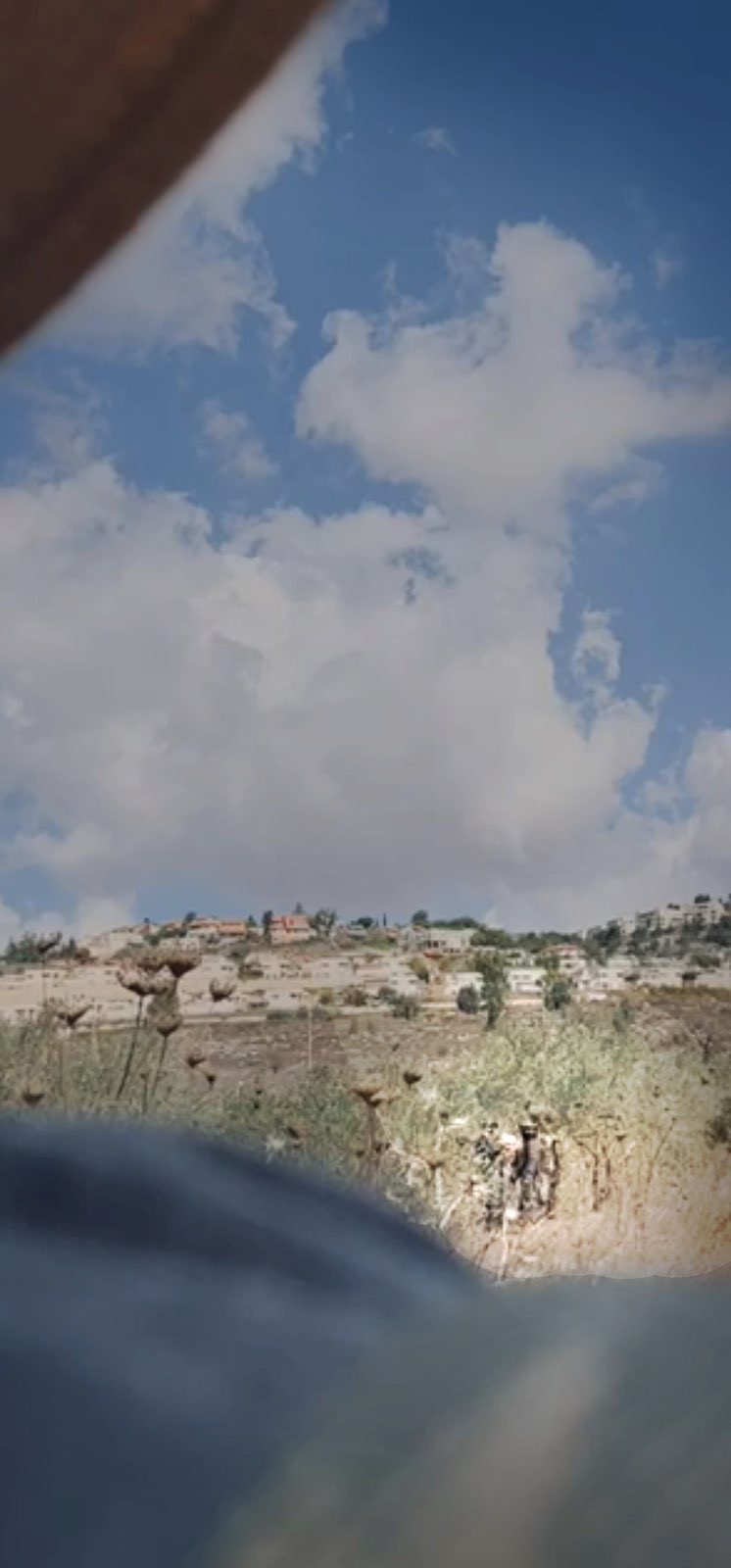
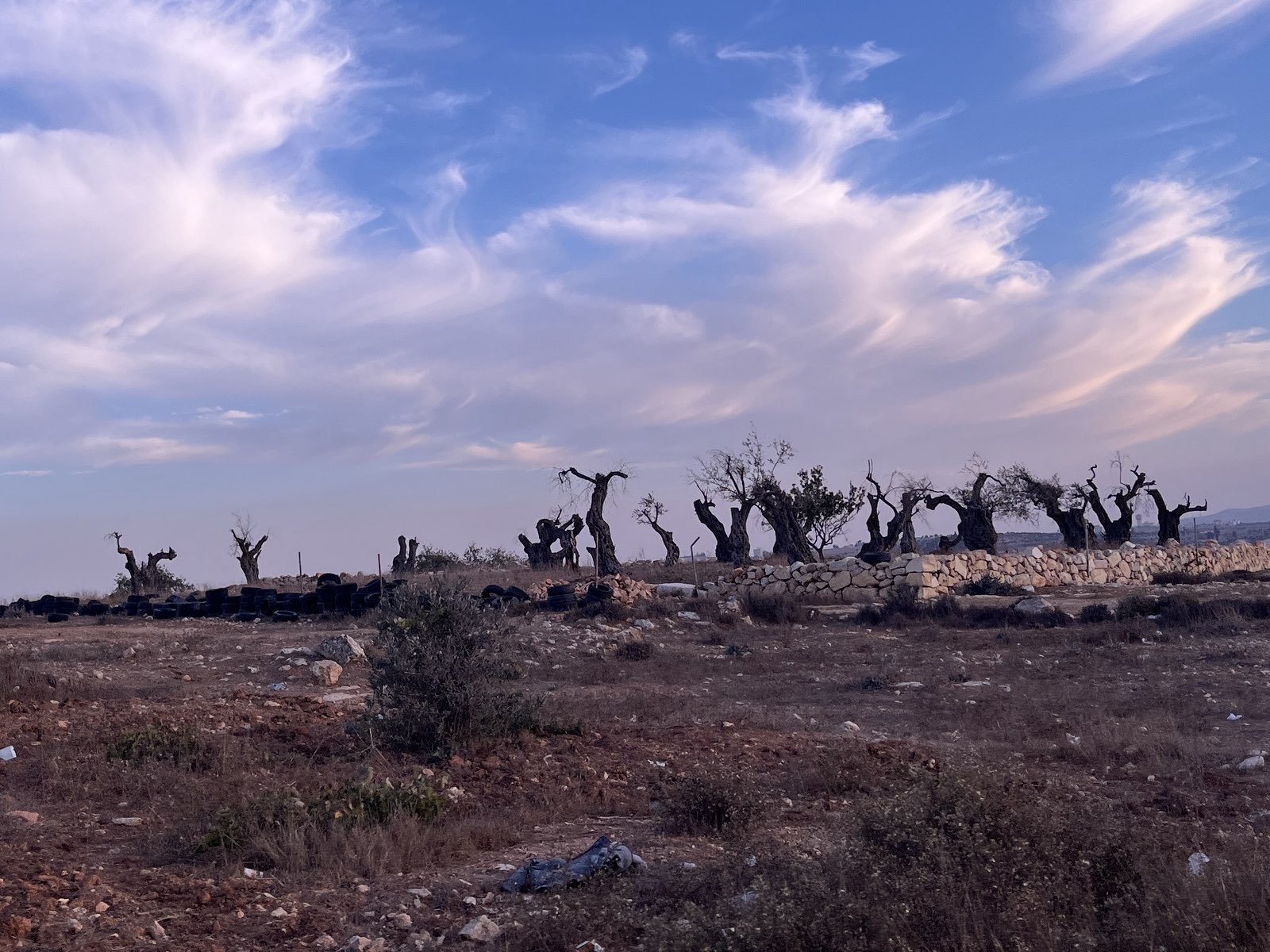
Looking across the valley, I see the land of a farmer I know. His family land runs from the olive trees below his house up over the ridge with about half his fields sloping down the other side into the next valley.

For generations his family has walked through or shepherded their sheep through their closer fields and onto their farther fields.

As part of the illegal settlement expansion and aggression since Oct 7th, the settlers, backed by the occupying army, have arbitrarily denied the farmer permission to use or even pass over his own land on the ridge.

To reach half of his fields he now must get in a car and drive almost an hour around the illegal settlement. A settlement that was built on stolen Palestinian land in the first place.

So, working his fields is now at best complicated and probably impractical. Of course, grazing his sheep on his farther fields is now impossible.

10.28.2024

Rock Land

The land is rock. Not rocks, but sheets of rock. Not dirt punctuated by many rocks, but sheets of rock marked with gaps and divots. Some big, some small. Some areas, the rock is polished from use. Other areas are rough. The sheets of rock can be so featureless that roads of safe passage are marked by stone walls or cairns. 


On the sheets of rock are boulders and smaller and smaller rocks, until at last sand. The wind-blown sand fills the dimples and crevasses in the rock sheet. The largest crevasses filled with sand support plant growth. In these crevasses Palestinians have gardens. One row of onions, or in bigger ones, a more conventional garden of five or six rows.

Rocks are used to build walls, fences, buildings, ovens, and terraces. Walls that are precisely built straight with trim sides, as though built for a formal garden. Also, there are rough-hewn walls. These are functional, but not works of art. All are built without mortar or cement by people who start building walls as soon as they are strong enough to lift even small rocks.

At times, big stones that are too big to lift, are positioned as the base of a soon to be wall. The wall is being built with manageable sized stones placed around them. Even slabs of rock, say six or seven feet by about four feet, are used by planting them on their end to form the backbone of a wall.

They present a jagged top that looks like some dinosaur's teeth coming out of the earth. Walls come in all heights, from terrace walls, well over a man's head, to walls little more than a row of rocks. These little walls may direct rains toward wells, or mixed with stone cairns, they may mark safe passage or a “roadway” across the rock.

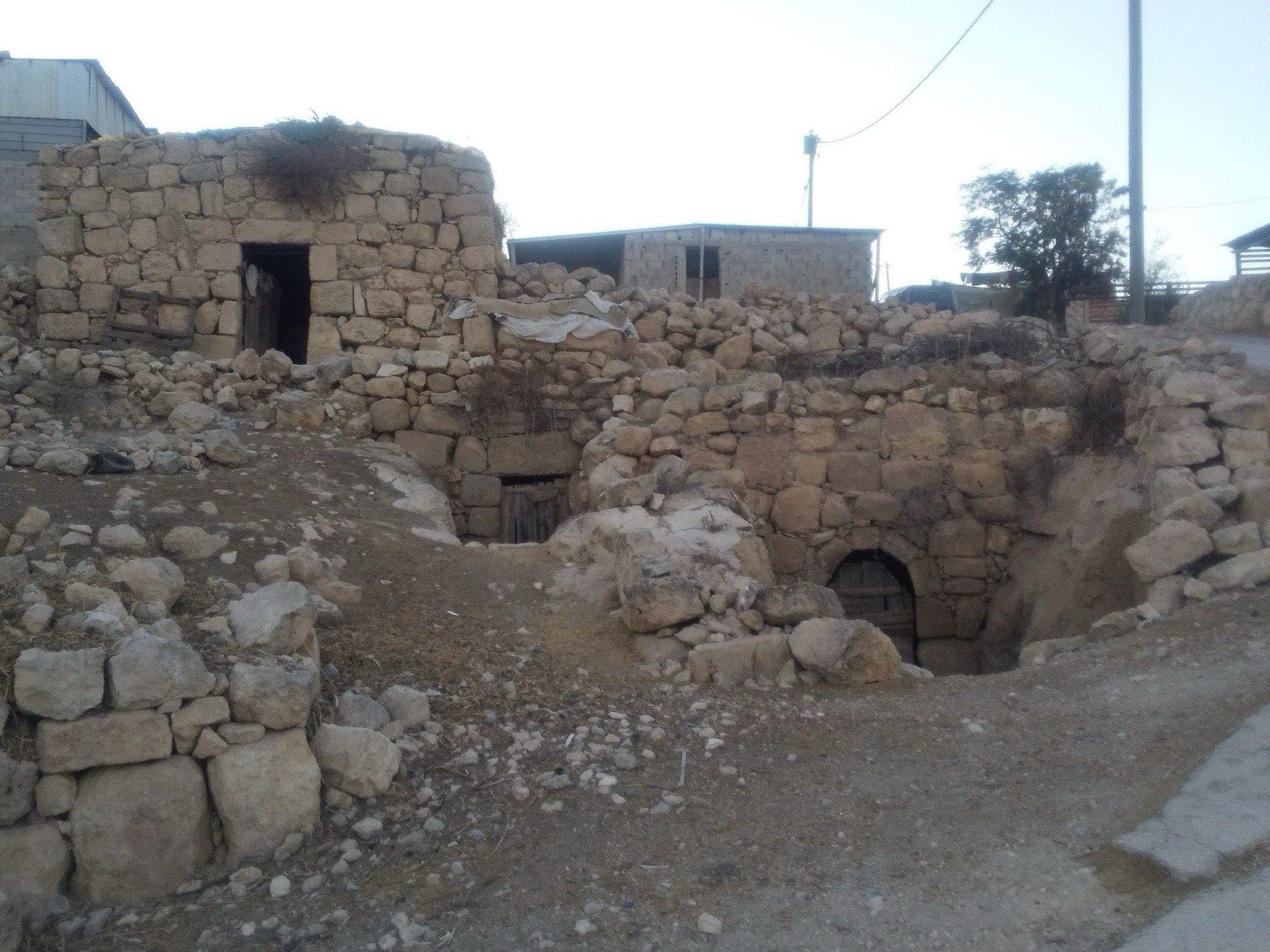
The use of rock goes below the surface too. Cavities in the rock, from small cavities to walk in caves, find a use. Caves that make dry and rodent-free granaries are fitted with steel doors. Caves that are dry, wind free, and temperature moderated, become communal bed rooms. Caves are kitchens, work rooms, and storage areas. Small cavities are used for traditional ovens. Some caves have complete roofs, others need some amount of added roof. Some are walk-in, others require a ladder. Most have been enlarged and shaped over the generations. They have doors, roofs, and other features have been fashioned so that caves can fill multiple needs. Each family uses a variety of available caves but mostly they live in conventional above ground houses.

The rocks and the people grow together and shape one another. The relationship is beautiful, as are the rock structures and uses. The rock itself seems to come alive as the sun settles and night encroaches. The rock faces and hills start to glow and radiate a warm inviting red color.

My Indignation

The night passed uneventfully. In the morning a couple of settlers drove a few cows along the public road. They turned off the road taking a short cut across Palestinian fallow land. Across the valley, a settler shepherd herded a flock of sheep from another direction across the Palestinian fallow land. The settlers met and then turned and drove their animals directly into a Palestinian olive orchard and garden. 

My first response was, “Let's just go down and drive the sheep out of the Palestinian's olive trees and garden.” The Palestinians said, “No, we are calling the police.” 

After half an hour of watching the sheep and cows grazing on the olives and garden, my indignation was growing and I was feeling more like, “Let's just go run the sheep out of the garden and orchard. While we’re at it, we could also scatter the sheep and even drive a few of them off.” The Palestinian owners again said no; instead they called the police another time. This was a saga in itself. The police had an endless list of questions to find the complaint that had been made just half an hour earlier.

Meanwhile, because of the injustice, my anger had risen more and I started thinking we could butcher a couple of sheep or maybe put out poison for them; anything to stop the settlers from deliberately grazing on the Palestinian olives. The sheep and cows would do irreparable damage each time they grazed in the orchard, eventually denying the Palestinians any value from their orchard or land. This was the intent of the settlers.

After another half hour, the Border Patrol showed up. This was after the cows and sheep had eaten their fill and moved off the Palestinian land. Even though the settlers and flocks were still visible, and we showed the Border Patrol videos, they said they couldn't do anything unless they eye-witnessed the crime. The police could act on complaints, but the Border Patrol could not. It was unclear why, when we called the police, they sent the Border Patrol. It is easy to ask if maybe that was intentional.

We have seen this before, where settlers drive their herds into Palestinian crops. The police are called and eventually the police say the settlers can't graze there, but not until the sheep have eaten their fill. Then the same sequence of events often plays out on subsequent days.

The patience, the nonviolent resistance of the Palestinians, was astounding. I was not watching years of my work being destroyed and I could barely restrain myself in the face of the injustice. By contrast, it was the Palestinian's income and future that was at risk, yet they restrained their emotions and worked methodically to prove that the system was not working.

10.25.2024

Stillness in the Olive Grove

One way that my companions and I serve here is to provide protective accompaniment to Palestinians while they’re carrying out their regular lives. Members of our team have been accompanying Palestinians picking olives the last few days. 

This morning I was in an olive grove when I heard a rifle shot and then angry yelling. Two IOF soldiers were at the base of the trees, screaming and pointing. The duo quickly turned into a group of seven, all carrying automatic weapons and pointing them at us harvesters. The men demanded we stop and then they separated the internationals from the Palestinians. 

The soldiers grabbed the Palestinians by their necks, shoving their faces down as they pushed them forward. They yelled and demanded compliance.

The internationals were treated very differently. We were unharmed. As minutes and hours passed in the desert sun, the internationals were offered shade and water. The Palestinians were refused these needs and the soldiers told us “they can swallow their spit,” and the interrogations and detainment continued. 

I found a spot on a tarp and sat next to the olives. The people next to me were still and frightened. The armed men demanded our phones and took pictures of our passports, even though it is prohibited by law. They would not identify themselves nor tell us why we were being detained. One of the international women picked up her phone, and they threatened to shoot her if she did it again. 

I knew I needed to remain calm and keep my head clear, when a grasshopper jumped onto the tarp with me. This caused an immediate and urgent-feeling and reaction inside of me. I wanted to jump up and run away from it or quickly squish to feel safe again. I have had a debilitating fear of bugs for most of my life, and that grasshopper triggered that fear in the most intense way.

But in that moment I realized the parallel in front of me. Even though I hate bugs, in nature I am in their home. It would be cruel to harm this defenseless being, something that belongs here. 

This is true of the Palestinians as well. This is their home. They were not harming anyone, just as the grasshopper wasn’t harming me. As I looked around at the violent harassment of the Palestinians, I did not understand why they were being treated this way. My heart screams in agony every day that my fellow brothers and sisters are being tortured, attacked, threatened, murdered, and my brain can’t comprehend why this is happening…simply because they’re existing.  

There is nothing else I can do in this moment. So, I sit on a tarp and watch a grasshopper as my heart breaks, until I’m forced to leave my Palestinian friends behind to meet whatever fate the soldiers decide that day.

Forced to abandon my friends with their oppressors

10.23.2024

10.22.2024

The Dragon

I look out and see a guard post on the ridge. It is not manned right now but is an Israeli marker that claims this land from the Palestinian owners. My eyes follow along the ridge to an Israeli outpost. This is an illegal expropriation of Palestinian land under international law, is not recognized by the Israeli government, but it is defended by Israeli soldiers and police. This is the actual taking of land, dispossessing the rightful owners of it.

They kill the owner's crops by grazing sheep on them while protected by soldiers. They raid the Palestinian owner's homes at night and by day, stealing, harassing, destroying the buildings, killing animals and even killing the owners, all protected by Israeli military to drive the Palestinian owners out.

My eye follows the ridge down to the Israeli settlement. This, like all settlements in the West Bank, is internationally recognized as an illegal seizure of Palestinian land but is recognized and heavily subsidized by the Israeli government.

Here Israelis, mostly immigrants from the global north, live in comfort, with great infrastructure all funded by Israel cheap rent, great schools, water and sewer, roads, police, health care. 

My eye scans along the ridge again and this time I see a dragon climbing the ridge, slowly consuming Palestine. Where before I saw a guard post, now I see the consuming flames of the dragon's breath. Where before I saw an outpost, now I see the devouring mouth eating up everything in its reach. Where before I saw a settlement, now I see the body of the dragon fat with stolen resources including land, animals, crops, houses, hopes, dreams, and lives.

I am watching Palestine being devoured by the dragon Zionism.

Resilience

I thought the trauma I would experience would be from seeing or being in some serious incident. But it is more from the systematic harassment, watching a human get bullied over and over and over again.

And I only see it for days at a time. Palestinians have been doing this for years, decades, with this last year escalating to a whole other level. It can feel hopeless to me. I have no idea how they maintain their resolve and strength. I find myself exhausted after only days in one place. Moving to different locations is a slight change of scenery, but there is just a different form of harassment at each location. The reprieve is short-lived. 

Even on break from working it is hard not to notice and be affected by the differences between the menial conditions in the villages and the luxury of the imposing illegal settlements. It is soul-crushing and maddening. So much so, sometimes I feel stuck in some sort of middle space between the two, where there is an emotional dead zone. Unable to concretely feel either, I settle into a sort of numbness and confusion. I imagine many emotions will come rushing into focus upon my return. 

Until then I try to focus on the work and take inspiration from my comrades in human rights, and the Palestinians, who time and time again show us the definition of resilience.

10.21.2024

Serving in the Garden


One of the most dangerous places we serve in Masafer Yatta, our location in the West Bank, is what is called the Garden. It is not a garden in the typical sense but rather a massive platform of stone, rock walls, shrubs, struggling olive plants, cacti and dirt. 

The view, however, is incredible. One can see a panorama of sloped grazing farm land, the local village and an illegal Israeli settlement. The family who owns the garden has worked the land for decades and holds a 100 year-old deed for it. Twice a day, he takes his goats and sheep out to graze, 6:30 to 10 AM and 4:30 to 7 PM. Two of us accompany him because he is harassed daily by Israeli settlers, soldiers, military or some combination thereof.

The point of the harassment is to push him off his land. It would be easy to give up after decades of persecution but this man and his family do not. They are practitioners of “samud,” steadfastness. Generations before them have resisted, therefore, they resist, always nonviolently. 

The farmer keeps going out into the garden to feed the sheep and goats, knowingly facing harassment. Each day before we serve in the garden, the farmer treats us to cups of warm sweet tea and perhaps a treat. Then we follow the animals and him to the garden, maintaining a short distance. 

We are to be the buffer between the harassers and the farmer. At some point, settlers, police or military approach us and ask for passports. They photograph them or take them even though that is forbidden by the United States government. They research our backgrounds to see if we are Palestinian sympathizers or members of organizations Israel considers terrorist. The irony of a nonviolent peace organization ever being considered a terrorist organization is not lost on me.

The conclusion of these interactions can result in a wide-range of possibilities from simple harassment to deportation. I had been enjoying the landscape and photographing the view when a settler told border patrol I was filming the illegal guard post on the farmer’s land. Border patrol took my phone, looked through the photos and discovered I had only shot panoramas and photos of my friend. They returned my phone and my passport and warned me not to photograph the empty guard post because it is classified.

Despite these disturbing interactions, we have the satisfaction of protecting the farmer who is able to do his job. In addition, we can look over the landscape, and enjoy the natural beauty of the West Bank and build relationships.

Why do Palestinians resist and persist under such stressful circumstances? Faith, history, love of land and samud. I see it in the farmer’s body as he contentedly crouches on a rock, sipping a coffee, smoking a cigarette, watching his sheep and goats graze.

This is his legacy.